How to Apply & Get Into to Oxford Biochemistry
In short:Thinking about applying to Oxford Biochemistry? This complete guide explains the entry requirements, application timeline, personal statement strategy, interview preparation, and reading list that successful applicants use to secure a place at Oxford.
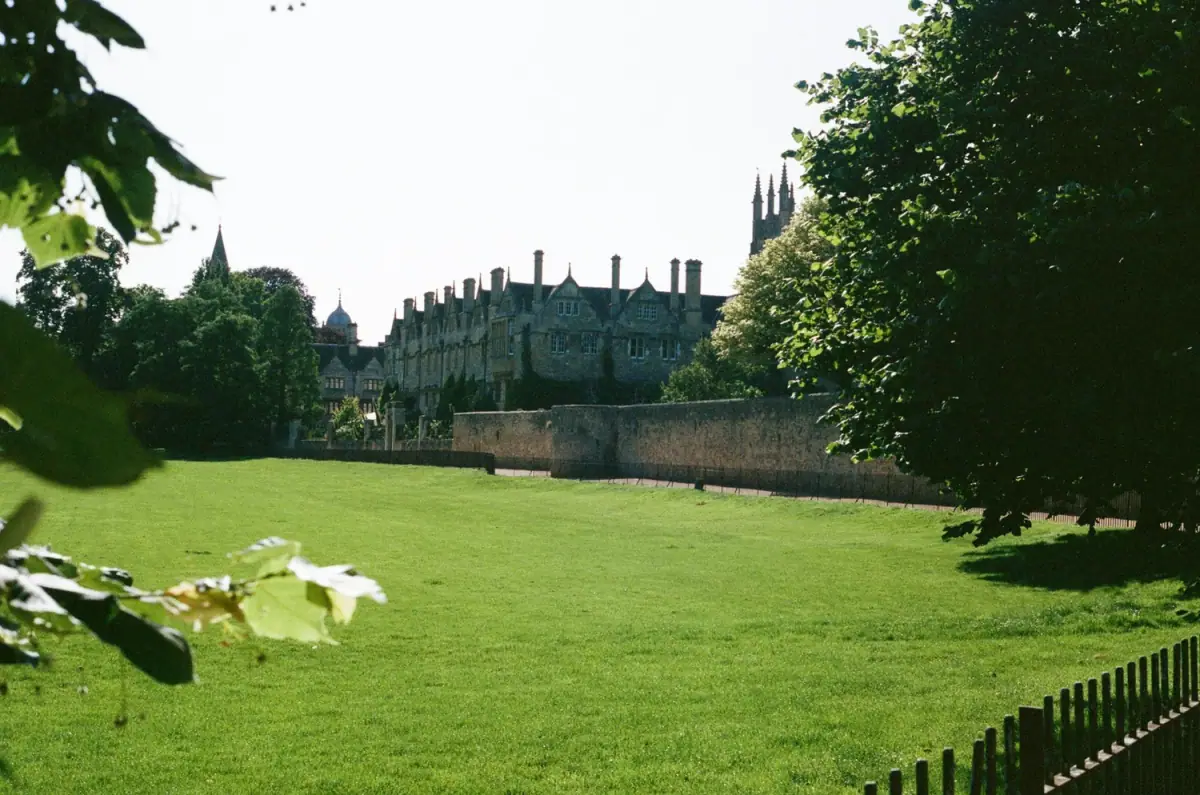
Oxford Biochemistry is where future Nobel Prize winners, doctors, and biotech founders have gotten started for decades.
Think you might be one of them? Read on to find out how to get in.
What’s covered
- Entry requirements
- Application timeline for Biochemistry
- How to ace the personal statement
- How to ace the interview
- The Oxford Biochemistry reading list
- FAQs
What is Biochemistry?
Biochemistry at University of Oxford is all about understanding life at its smallest, most fascinating scale – DNA, proteins, cells, disease, the chemistry that keeps you alive (and occasionally gives you a cold).
If you enjoy both Biology and Chemistry and don’t want to choose between them, this course lets you keep both.
Oxford starts with a strong grounding in the core sciences, before moving into topics like genetics, neuroscience, immunology, and how diseases work. Later on, you’ll carry out your own research project in a real lab, which is exactly as cool as it sounds.
Biochemistry graduates go on to medicine, research, pharmaceuticals, biotech, finance, consulting – basically anywhere that likes very smart people who can solve difficult problems. It keeps your options very open, even if you’re not sure you want to be in research post-graduation.
Entry requirements

If we’re honest, the bar is high for Oxford. But you probably already knew that.
Successful applicants usually have a wall of top grades and a genuine love of science beyond the classroom.
| Requirement | Details |
|---|---|
| A-levels | A*AA including Chemistry and at least one of Biology, Physics, or Mathematics |
| International Baccalaureate (IB) | 39 points with 7,6,6 at Higher Level including Chemistry |
| Scottish Advanced Highers | AA / AAB |
| Required subjects | Chemistry and another science subject or Mathematics |
| Recommended subjects | Mathematics |
But grades alone won’t get you in – all Oxford applicants typically meet the grade requirements. Oxford is looking for curiosity and real enthusiasm for how science works.
Interviewed: 39%
Successful: 11%
Intake: 101
Your Oxford Biochem application timeline
The Oxford process happens much earlier than other UK universities and has many more steps involved, and you absolutely cannot miss any key deadlines.
This all begins one year before your entry year – so, if you’re applying for a 2027 entry, you’ll need to begin your application by early summer 2026. Overall, your work for this application will run from roughly July-December of your final year at school.
Unusually, Biochemistry is one of the few Oxford subjects that doesn’t require an admissions test. You do, however, have to submit your personal statement and sit an interview, if invited.
Here’s a simplified breakdown of the stages, their deadlines, and our estimation for the amount of work you’ll need to do for each step.
| Oxford admissions step | Deadline | Work needed |
|---|---|---|
| Personal statement (UCAS application) | 15 October | 2–3 months of preparation, ideally starting in July |
| Interview (if invited) | Usually mid to late December | 1–2 months of preparation, starting in November or as soon as you receive an interview invitation |
| Offer decisions | Early January | Wait for the admissions decision |
| Confirmation of place | Results day (usually summer) | Meet your offer conditions |
| Beginning your course | October | Celebrate and prepare to start your degree at Oxford |
P.S, don’t hesitate to contact us for a more detailed breakdown of the preparation you should undertake! We’ll match you with a previous Oxford Biochemistry graduate who’s been in your very shoes.
Applying to Oxford Biochemistry or other elite science programmes? Learn from Oxford Biochemistry graduates who know exactly what admissions tutors are looking for - from crafting a standout personal statement to excelling in the Oxford interview.
Aiming for a top university?
Get matched with an Admission Expert who has already been where you want to go. Free consultation, response within 24 hours.
Book a free consultationHow to ace a Biochemistry personal statement

Your personal statement should show that Biochemistry isn’t just something you’re good at, but is actually an area you’re authentically fascinated by.
Strong statements include:
-
Super-curricular reading
-
Science lectures or summer schools
-
Research projects or competitions
-
Evidence of curiosity (podcasts, articles, experiments, etc.)
Start with a hook, and explain what fascinates you. Cancer biology? Genetics? Drug development? Why? Oxford tutors read thousands of statements. Specific enthusiasm stands out. Generic “I have always loved science” does not.
Our Oxford Biochemistry admissions tutors are experienced in guiding students here – from finding the right super-curricular for you, to helping you shape and refine your personal statement. Please get in touch if you feel you’d benefit from some professional guidance!
How to ace the Biochemistry interview

The Oxford interview mimics the Oxford tutorial, which is the weekly academic discussion that students have with their tutors during term-time. It makes sense, really – they want to make sure you’re someone they could teach.
Teach is a key word. They’re not expecting you to know everything – especially because Biochem isn’t typically an available A Level/IB subject. The interview will likely include technical questions to assess your capability, but they’re looking for intellectual flexibility and curiosity as much as they are capability.
Tutors want to see:
-
How you approach unfamiliar problems
-
Whether you can explain your reasoning
-
How you respond to hints
You might analyse data, predict experimental outcomes, or talk through a scientific scenario you’ve never seen before.
Practice articulating your thought process clearly and concisely, especially with unfamiliar or even abstract problems, as communication is key.
Take some time to reread your personal statement to make sure you’re confident with everything you mention. Check on your school curriculum and ensure you can talk beyond it.
The Oxford Biochemistry reading list

You don’t need to read a university textbook cover to cover, but exploring the subject beyond school makes a huge difference – especially to your personal statement and your interview.
If you want to understand the big discoveries
Rosalind Franklin: The Dark Lady of DNA
Brenda Maddox
You will have heard of Watson and Crick and their discovery of DNA, possibly with a cursory nod to Rosalind Franklin’s involvement. In truth, her work was nothing short of critical. This text traces Franklin’s life from her education at University of Cambridge through to her pioneering work on coal, viruses, and DNA, inciting conversations around scientific integrity, gender inequality in mid-20th-century laboratories, and the collaborative yet competitive environment of British biophysics.
If you want to understand genetics and disease
The Gene: An Intimate History
Siddhartha Mukherjee
Mukherjee traces the gene’s story from Gregor Mendel’s pea-plant experiments in 19th-century Moravia through Charles Darwin’s evolutionary theory, the rediscovery of heredity, and the 20th-century molecular breakthroughs of Watson, Crick, and Rosalind Franklin. The narrative continues through the horrors of Nazi eugenics, the postwar revolution in molecular biology, and the sequencing of the Human Genome Project, illuminating how each step reshaped our understanding of identity, disease, and destiny.
If you want something more technical (but still engaging)
Power, Sex, Suicide
Nick Lane
Each part of the book explores a key theme: “power” through bioenergetics and metabolism, “sex” through mitochondrial inheritance and reproductive evolution, and “suicide” through programmed cell death and aging. Lane contends that mitochondria underlie both vitality and mortality – fuelling life while producing the reactive by-products that drive cellular decay.
Reading is just the beginning. To really impress tutors, you’ll want to think like a Biochemist.
-
**Follow the science beyond the syllabus
**If a topic interests you – cancer biology, gene editing, neuroscience – go down the rabbit hole. Watch lectures, read articles, look at real research. Oxford cares far more about curiosity than ticking off specifications. -
Link chemistry to real life
Drug development, vaccines, genetic testing, aging, nutrition. Biochemistry underpins huge parts of modern life. Noticing those connections shows you see the subject as something alive, not just examinable.
Turn your personal statement into a strategic advantage - with expert feedback that highlights academic depth, clarity of thought, and genuine intellectual curiosity.
Want to make your dream a reality?
Think Smart Admissions pairs you with an Oxford Biochemistry graduate that we think matches your profile best. Drop us a line, and let’s get to work.
Get in touch todayFAQs
How long is the Oxford Biochemistry degree?
The standard Biochemistry course at University of Oxford lasts three years for the BA degree. Many students choose to stay on for a fourth year (the MBiochem), which includes a substantial research project and is especially useful if you’re considering a career in science or academia.
What grades do you need for Oxford Biochemistry?
Typical offers are A*AA at A-level, which must include Chemistry plus either Biology, Physics, or Maths. In reality, most successful applicants are predicted the top grades across the board, so aim as high as humanly possible.
How competitive is Oxford Biochemistry?
Very. There are far more strong applicants than places each year, which means tutors are choosing between students who all look excellent on paper.
Do you need Maths for Oxford Biochemistry?
You don’t have to take A-level Maths, but you should be comfortable with data, graphs, ratios, and basic problem-solving.
How much does Oxford Biochemistry cost?
For UK students, tuition fees are currently £9,790 per year (set by the government). Fees for overseas students is currently £54,990 per year. International fees are significantly higher and can vary each year, so always check the official Oxford website for the latest figure.
Is Oxford Biochemistry worth it?
If you love science, absolutely. You’ll get world-class teaching, access to cutting-edge research, and a degree that opens doors in medicine, biotech, pharmaceuticals, consulting, finance, and beyond. It’s intense, but few people regret the experience.
What careers can you get with an Oxford Biochemistry degree?
Graduates go into research, medicine, pharmaceuticals, biotechnology, science policy, patent law, consulting, finance, and science communication. The analytical training is extremely transferable. You’re not locked into a lab forever (unless you want to be).
What are Oxford Biochemistry interviews like?
They’re essentially mini tutorials. You might be asked to interpret data, solve unfamiliar problems, or apply concepts in new ways.
Do you need work experience or a lab placement?
No. It can help, but it’s not expected. Reading beyond the syllabus, attending lectures, doing science competitions, or even running your own small projects shows just as much enthusiasm.
Is Oxford Biochemistry more Biology or Chemistry?
Both – and then some. The course starts with strong chemical foundations and moves into genetics, cell biology, structural biology, and disease.
Can you apply without Biology A-level?
Usually yes, as long as you have Chemistry and another science or Maths. What matters most is that you can handle both the chemical and biological sides of the course.