How to Get Into Oxford Economics & Management
In short:Oxford Economics Management is one of the most competitive degrees in the UK. This expert guide breaks down entry requirements, acceptance rates, the TARA admissions test, interviews, personal statements, and how to stand out as an applicant.

One of the most prestigious degrees at one of the most prestigious universities, Oxford Economics & Management (E&M) is a guaranteed launchpad for a successful professional career.
Sold? Read on to find out how to actually be accepted.
What’s covered
-
What is Economics & Management?
-
Entry requirements and the typical academic profile of an Oxford E&M applicant
-
Application timeline for E&M
-
How to ace the personal statement
-
How to ace the TARA (Thinking Skills Assessment)
-
How to ace the interview
-
What to read to impress Oxford admissions: the E&M reading list
-
Key takeaways
What is E&M?
Economics & Management (E&M) at University of Oxford is a rigorous degree. It combines economic theory with the practical study of how organisations operate – you’d study microeconomics, macroeconomics, quantitative methods, alongside management topics like strategy, finance, and entrepreneurship.
That all makes it very popular for employers. E&M graduates are among the most employable in the country, frequently moving into lucrative fields like consulting, finance, and tech, and quickly accessing leadership roles.
Approximately 1,700 applications per year
Around 85 undergraduate places
Roughly 5% acceptance rate
Daunted by those statistics? As well you should be, but no need to be completely put off; it’s not impossible. And with the right preparation, that 5% acceptance rate could apply to you.
Entry requirements

Successful candidates typically have exceptional academic records, often with outstanding Maths performance and predicted A-level grades of A*A*A* – i.e the best grades possible.
Here are the official requirements, but remember: meeting them only gets you through the door. Tutors weigh admissions tests, interviews and academic potential heavily.
QUALIFICATION & REQUIREMENT
| Qualification | Requirement |
|---|---|
| A-levels | A*AA (including Mathematics) |
| Advanced Highers | AA / AAB |
| International Baccalaureate (IB) | 39 points (including core points) with 766 at Higher Level |
| Any other equivalent qualification | Accepted: check specific guidance |
Mathematics is essential for E&M. Many successful applicants also study Further Maths, Economics, or another analytical subject.
You don’t need Business Studies or Economics to apply, but you do need strong ability and intellectual curiosity about how economies and organisations function.
Your Oxford E&M application timeline
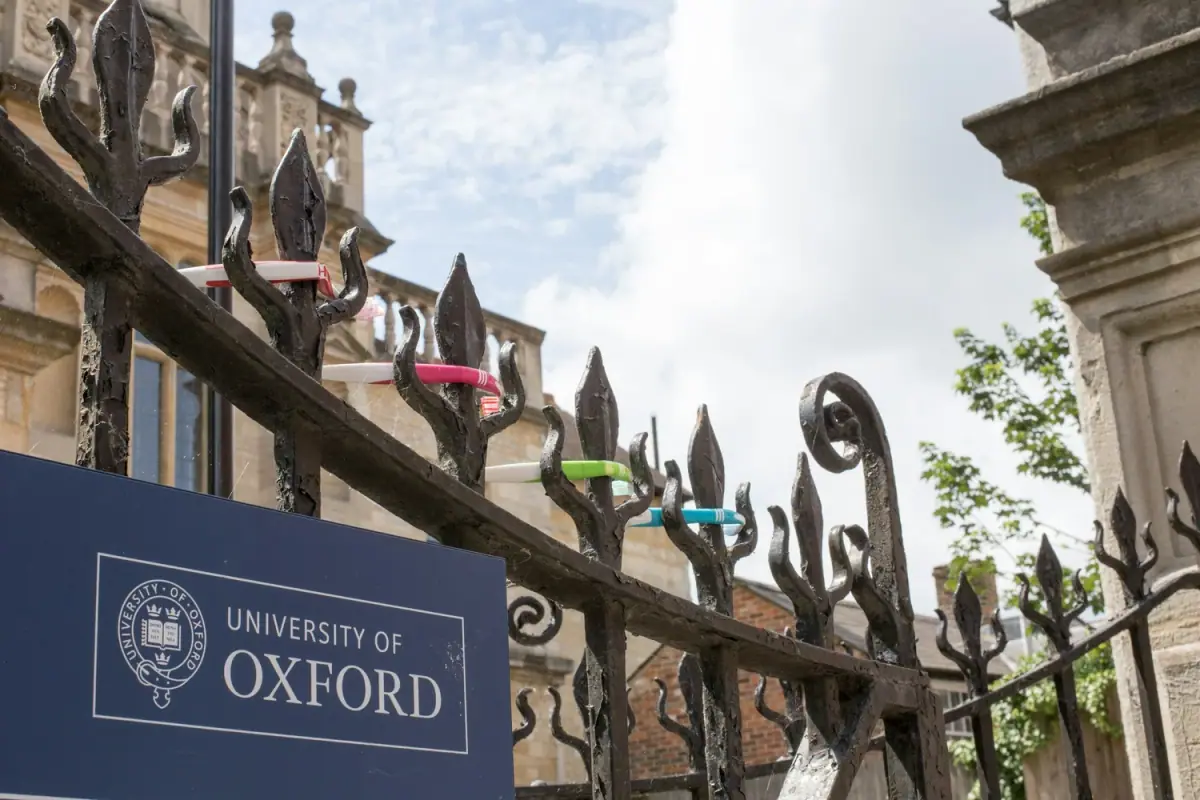
The Oxford process happens much earlier than other UK universities and has many more steps involved, and you absolutely cannot miss any key deadlines.
This all begins one year before your entry year – so, if you’re applying for a 2027 entry, you’ll need to begin your application by early summer 2026. Overall, your work for this application will run from roughly July-December of your final year at school.
Here’s a simplified breakdown of the stages, their deadlines, and our estimation for the amount of work you’ll need to do for each step.
| Oxford admissions step | Deadlines | Work needed |
|---|---|---|
| Registering for admissions test (TARA) | Registration: 18 June to 19 September (6pm BST) Booking: 18 August to 26 September (6pm BST) | Submit on time |
| Personal statement (UCAS application) | 15 October | 2–3 months, begin late July |
| Admissions test: TARA | October | 2–3 months, ideally begin late September |
| Interview (if invited) | Varies, usually mid-late December | 1–2 months, begin after the admissions test or as soon as you receive an invitation |
| Offer decisions | Early January | - |
| Confirmation of place | On results day, usually summer | - |
| Beginning your PPE course | October | Celebrate! 🎉 |
P.S, don’t hesitate to contact us for a more detailed breakdown of the preparation you should undertake!
Applying to elite UK or US universities? Learn from Oxford, Harvard, and LSE graduates who know exactly what top admissions tutors are looking for.
Aiming for a top university?
Get matched with an Admission Expert who has already been where you want to go. Free consultation, response within 24 hours.
Book a free consultationHow to ace an Economics & Management personal statement

You’ll want to show that you’re genuinely interested in E&M, and for that you’re going to need ‘super-curriculars.’ These are academic extracurriculars directly related to your subject that prove you have the drive and passion for the subject to be taught at Oxford.
Have a read of the section titled ‘the E&M reading list’ down below for some of our ideas on what you can do here.
Make sure that your statement reads like you, too. We know AI is tempting to use, but frankly, it’ll suck the life out of your tone. Use AI to brainstorm and help plan a structure, but please don’t use it to do the actual writing.
Our economics and management tutors are experienced in guiding students here, from finding the right super-curricular for you, to helping you shape and refine your personal statement. Please get in touch if you feel you’d benefit from some professional guidance!
How to ace the TARA
If you’ve been frantically Googling the TSA – stop. For courses like Economics & Management, the Thinking Skills Assessment has now been replaced by TARA (Test of Academic Reasoning for Admissions).
The new test serves a similar purpose but with a slightly different structure. Where the TSA focused heavily on multiple-choice reasoning (plus an essay for some courses), TARA is designed as a broader assessment of academic thinking: critical analysis, problem-solving, and written argument.
What’s the difference between TSA and TARA?
TARA is explicitly designed to distinguish between already top-performing applicants, including those with flawless grades. It doesn’t test how much you know; it tests how you think when faced with unfamiliar material.
Unlike typical school exams, you should not expect to score anywhere near your usual percentages.
Test overview
TARA is a computer-based test made up of three separately timed modules, each lasting 40 minutes:
Critical Thinking
Multiple-choice questions assessing your ability to evaluate arguments, identify assumptions, detect flaws, and draw conclusions.
Problem Solving
Quantitative and logical reasoning questions using basic mathematics and unfamiliar scenarios – calculators not allowed.
Writing Task: You choose one prompt and write a structured response explaining the statement, arguing against it, and evaluating your own position.
How to prepare
Preparation for TARA looks very different from revising for A-levels.
Use unfamiliar material: The test is designed around novel problems. Practice with logic puzzles, data interpretation, and argument analysis.
Practise logical reasoning: This is a large portion of the test, and a skill that could be unfamiliar to you..
Accept that it will feel hard: Many applicants panic because they’re not scoring as highly as usual. That’s normal. Everyone else is in the same boat.
Example TARA question
Here’s a simplified example of the kind of critical thinking question you might encounter:
Helen promised she would attend the meeting or send a substitute. We know she cannot attend the meeting. So we are expecting a substitute.
You would then be asked to identify the conclusion, assumption, or logical structure of the argument.
Questions like this test whether you can:
-
Separate reasons from conclusions
-
Spot hidden assumptions
-
Follow logical consequences
These skills sit at the heart of Oxford tutorials, especially in Economics & Management, where arguments and evidence constantly interact.
How to ace the E&M interview

To ace the Oxford E&M interview, it’s crucial to demonstrate an ability to think, rather than simply an ability to memorise.
What we mean by this is that Oxford tutors are looking for intellectual flexibility, curiosity, and capability – candidates who can analyze a problem, break it down logically, and explore different perspectives.
Practice articulating your thought process clearly and concisely, as communication is key. Also, it’s okay to pause and think before responding!
Make sure you know your stuff, though – you can only be intellectually flexible insofar as you have a strong working knowledge of economics and business. Take some time to reread your personal statement to make sure you’re confident with everything you mention. Check on your school curriculum and ensure you can talk beyond it.
Finally, stay calm and collected: interviews can be intense, but showing confidence and resilience will leave a lasting impression on your interviewers.
The Oxford E&M reading list

Economics
“It is not from the benevolence of the butcher, the brewer, or the baker that we expect our dinner, but from their regard to their own interest.”
– Adam Smith, The Wealth of Nations
-
Start with Tim Harford’s The Undercover Economist, which brilliantly demonstrates how economic forces shape everyday life, from supermarket pricing to urban planning.
-
Steven Levitt and Stephen Dubner’s Freakonomics is another excellent entry point, showing how economists use data to uncover unexpected patterns in human behaviour.
-
If you want to stretch yourself further, Ha-Joon Chang’s 23 Things They Don’t Tell You About Capitalism offers a critical perspective on free markets, helping you develop the nuanced thinking Oxford tutors love.
Management
“Culture eats strategy for breakfast.”
– Peter Drucker
-
Michael Porter’s Competitive Strategy is foundational for understanding how companies gain advantage within industries.
-
Jim Collins’ Good to Great examines why some firms outperform others over the long term.
Eric Ries’ The Lean Startup introduces modern approaches to innovation, risk, and entrepreneurship.
Turn your personal statement into a strategic advantage - with expert feedback that highlights academic depth, clarity of thought, and genuine intellectual curiosity.
How to think like an Economist

Reading is just the beginning. To really think like an economist, train yourself to analyse the world every day.
-
Stay up to date with publications like the Financial Times and The Economist to connect theory with current events.
-
Ask questions – every policy choice involves trade-offs. If governments subsidise energy, what are the unintended consequences? If interest rates rise, who benefits and who loses?
-
Economics is ultimately about behaviour and incentives. How do taxes, prices, and regulations change what people and firms do?
-
Challenge your own assumptions. Consider opposing viewpoints. The ability to evaluate arguments critically is exactly what Oxford tutorials demand.
General top tips for Oxford applications

It might feel like Oxford acceptance is a lottery, but it’s not totally true. There are definitely ways you can drastically improve your chances of getting into Oxford.
Aim for top grades
It goes without saying that you need near perfect scores on your exams at school to be considered for a place at Oxford. Make a comprehensive study schedule, focus on your weaknesses (as uncomfortable as that is), and try your very best in exams.
Apply strategically
Oxford is a collegiate university, meaning that it’s made up of about 30 undergraduate colleges dotted around the city.
Some think that by applying to perceivably ‘less-competitive’ colleges will increase your chances. That’s definitely not true, because you just get ‘pooled’ to other colleges if you applied to an oversubscribed college but are a strong applicant.
However, it’s not a bad idea to check out which colleges you think would fit your vibe more. Remember that you’re hopefully interviewing with that college’s tutors, so do some research on their academic interests. See which colleges align most closely with your academic expertise, and try to apply to those. In the event that you do get an interview, you could really win them over.
Do some ‘super curriculars’
Oxford places huge weight on the personal statement. Our Oxbridge admissions tutoring package, accordingly, allocates a considerable amount of time to writing your personal statement.
The best statement is one that shows your interest in your subject. For example:
-
Completing online courses or MOOCs (Massive Open Online Courses) relevant to your subject. You can find courses from platforms like Coursera, edX, or Future Learn. This is particularly popular with students as it is accessible and free.
-
Reading books, academic papers, or articles related to your subject.
-
Attending lectures, talks, or conferences, either in-person or online.
-
Participating in subject-related competitions like Olympiads, essay contests, or mathematical challenges.
-
Visiting relevant museums, galleries, or historical sites.
-
Taking part in research projects, either independently or through a school or university program.
Prepare thoroughly for the admissions process
Don’t underestimate the effort it takes to write your statement, prepare for your admissions test, and practise interviewing. Start early, and polish your skills!
Relax!
It can be overwhelming to go through all the tricky stages of the application while still studying hard at school. Make sure you have a healthy work-life balance, so you can sit the admissions test and hopefully the interview at your best.
Plus, no one wants to admit someone who’s already stressed out of their mind!
Key takeaways

Mark 15 October in red – it’s earlier than ANY deadline across the UK (barring Cambridge and Medicine applications), USA, and most of Europe.
-
Master the TSA section A and focus on your grades!
-
Start your personal statement early, and get someone you trust to guide you (we can help here).
More than anything, Oxford’s admissions tutors are looking for genuine intellectualism – a genuine desire to learn about your subject, as well as the academic capability to do so at such a rigorous institution.
Oxford tutors also look for teachability, especially during the interview stage. We’ll write more on this in the future, but the interview is effectively a mini Oxford tutorial, and they want to see that you can be flexible with your thinking, adaptable to new information, and think on your feet.
On a human level, the tutors also want to be able to get along with you – no one wants to teach someone they don’t like for three years!
Want to make your dream a reality?
Think Smart Admissions pairs you with an Oxford E&M graduate who was once in your shoes. Drop us a line, and let’s get to work.
Get in touch today